
Brain Tumour Awareness Month 2026: Awareness, Understanding, and Hope

20 Mar 2026

7 Min. Read

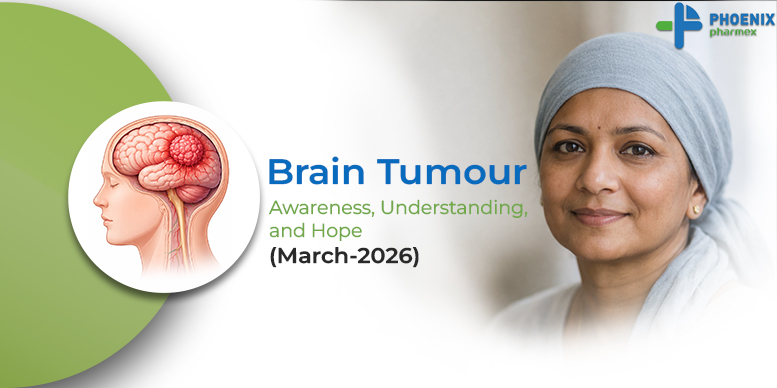
Brain Tumour Awareness Month 2026: Awareness, Understanding, and Hope
When our mind hears something unfamiliar, it naturally looks for information. What it needs is understanding, not panic.
Where Brain Tumour Awareness Begins
It often begins in a very ordinary way: a headache that feels slightly different, a brief moment of forgetfulness, or a word that doesn’t come as quickly as it used to. Someone mentions the term “brain tumour”, and suddenly the mind moves ahead of the facts. This is where a common misunderstanding appears. Most symptoms people worry about are not automatically caused by a brain tumour, and even when a tumour is present, it does not automatically mean the worst outcome. During Brain Tumour Awareness Month 2026, the goal is not to frighten people but to replace uncertainty with clear information. Fear tends to grow in situations where knowledge is missing, while calm grows when things become understandable. The best way to approach the topic is slowly, step by step, without rushing to conclusions.
Understanding Brain Tumours
A brain tumour simply refers to an abnormal growth of cells in the brain or in the tissues surrounding it. That is the basic definition, nothing more dramatic than that. Some tumours grow slowly, while others grow faster. Some are non-cancerous (benign), and others are cancerous (malignant). They may begin in the brain itself or spread from another part of the body. The important point to understand is that a tumour is a medical condition that can be evaluated, classified, and managed. It is not a mystery or chaos. Healthcare professionals approach it systematically, examining each case carefully before making decisions.
Why Do Brain Tumours Develop?
Cells in our body usually grow, repair themselves, and rest in an organized rhythm. Sometimes, however, changes occur in how certain cells regulate their growth. Instead of following their normal pattern, they continue multiplying. This may happen due to genetic factors, certain environmental exposures, radiation, or sometimes for reasons that remain unclear. It is important to remember that most people who experience headaches, dizziness, or memory changes do not have a brain tumour. The brain is very sensitive, and many common conditions can cause similar symptoms, including stress, migraines, hormonal changes, and sleep disturbances. Symptoms alone are not conclusions; they are signals that sometimes ask for evaluation. Understanding this difference helps prevent unnecessary fear.
Brain Tumour Diagnosis and Medical Evaluation
When there is a concern about a possible brain tumour, healthcare professionals follow a structured pathway. It usually begins with a detailed medical history and physical examination. If needed, imaging tests such as MRI or CT scans are performed to view the brain clearly. In certain situations, further evaluation like a biopsy may be recommended to understand the nature of the tumour. Based on the findings, doctors discuss treatment options tailored to the individual case. These options may include monitoring small or slow-growing tumours, surgery to remove or reduce the tumour, radiation therapy, or medications that help control tumour growth. The important thing to notice is the structure of the process. There is careful assessment, classification, and planning. Even complex cases are managed step by step through guided decision-making.
Brain Tumour Diagnosis and Medical Evaluation
One of the biggest sources of fear surrounding brain tumours comes from the assumption that every case behaves the same way. In reality, outcomes vary because each tumour is different. Several factors influence prognosis, including the type of tumour, its location in the brain, its growth rate, the overall health of the patient, and how well the tumour responds to treatment. Some tumours remain stable for many years, while others respond well to therapy. Some cases require long-term monitoring and gradual adjustments in treatment. This variation does not mean unpredictability; it means that care is personalized. Modern medicine focuses on adjusting treatment plans as more information becomes available.
Preparing Calmly for Brain Tumour Testing
If someone is undergoing evaluation during Brain Tumour Awareness Month 2026, it is helpful to understand what the process may look like. There may be waiting periods between tests, medical reports may contain unfamiliar terms, and decisions are rarely made in a single day. Experiencing uncertainty while waiting for results is normal, and emotional ups and downs are also normal. Practical steps can help during this period. Writing down questions before appointments, bringing a trusted person to consultations, asking for clarification whenever explanations feel unclear, and taking time before making decisions can all make the process easier. Patients are allowed to pause, understand the information, and move forward once things feel clearer. A sense of control often returns when information becomes structured.
Life After a Brain Tumour Diagnosis
Hearing the word tumour can feel overwhelming, but a diagnosis does not erase a person’s identity. People continue living their lives—working, caring for their families, laughing, planning, and adapting to new routines. For some, life changes gradually. For others, daily routines may shift. Yet many individuals rebuild a sense of normalcy over time. Awareness months are not meant to spread fear; they aim to encourage evaluation, open conversations, and reduce the stigma around serious medical conditions. The brain is complex, but it is not beyond understanding. Patients and families are not powerless when facing it.
A Gentle Perspective
Brain Tumour Awareness Month 2026 serves as a reminder not to panic about symptoms but to approach them thoughtfully. It encourages people to notice persistent changes in their health, seek medical evaluation calmly, trust structured healthcare processes, and support those who are navigating diagnosis or treatment. Information helps stabilize emotions, and structured medical care restores perspective. Most health concerns eventually have explanations, and when something significant is discovered, it is approached with planning rather than chaos. It is natural to feel concerned, but it is also possible to remain steady.
Frequently Asked Questions About Brain Tumours
1. Are headaches usually caused by brain tumours?
No. Most headaches are linked to common conditions such as tension headaches or migraines. Brain tumours are a rare cause. However, headaches that are persistent, worsening, or associated with symptoms like vomiting or vision changes should be evaluated.
2. Is every brain tumour cancerous?
No. Many brain tumours are non-cancerous (benign) and tend to grow slowly. Whether a tumour is cancerous or not depends on its type, location, and behavior.
3. Can brain tumours be treated?
Yes. Treatment depends on the specific case and may include monitoring, surgery, radiation therapy, or medications. Doctors choose the approach based on the tumour type and overall health.
4. Are brain tumours fatal?
Not always. Outcomes vary widely depending on the type and stage. Many people continue to live active and meaningful lives after diagnosis and treatment.
5. Should I get scanned if I feel anxious?
Scans are usually recommended based on symptoms and clinical evaluation, not anxiety alone. It’s best to discuss your concerns with a healthcare professional to decide the right next step.
References
https://www.mayoclinic.org/diseases-conditions/brain-tumor/symptoms-causes/syc-20350084
https://my.clevelandclinic.org/health/diseases/6149-brain-cancer-brain-tumor
https://braintumor.org/brain-tumors/about-brain-tumors/brain-tumor-facts/
Disclaimer:
The information in this article is provided for educational and awareness purposes only and should not be considered medical advice, diagnosis, or treatment guidance. Health conditions vary among individuals, and readers should consult qualified healthcare professionals for personalized medical recommendations. Phoenix Pharmex supports access to reliable health information but does not provide medical consultation through this content. Any medicines or therapies mentioned are for informational reference only and should be used under the supervision of licensed medical practitioners.




.png)





.png)
.png)
 Login with Facebook
 Login with Google
