
What is Cervical Screening Awareness Week? Benefits, Process & Early Detection

04 May 2026

6 Min. Read

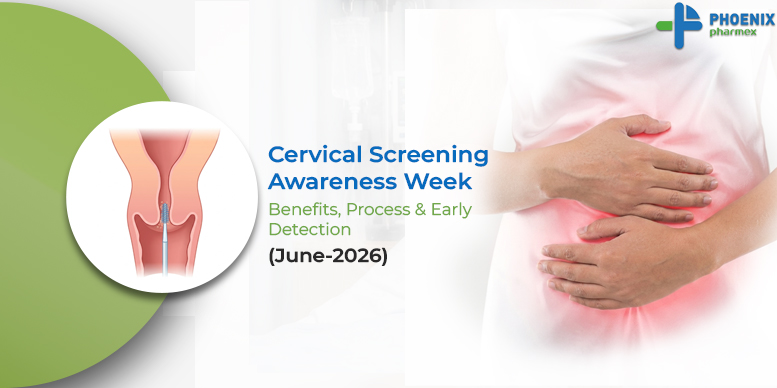
What is Cervical Screening Awareness Week? Benefits, Process & Early Detection
When a health check feels unfamiliar, the mind often fills that space with worry but most screenings are designed to bring reassurance, not urgency.
Cervical Screening Awareness
It often begins with a simple reminder, a message, a poster, or a conversation that says, “Cervical screening is due.” You pause. You’ve heard of it, but may not be completely sure what it involves or whether it’s something you need right now. The hesitation that follows is usually not fear, but uncertainty.
The key misunderstanding is that cervical screening is not a test for something already wrong, it is a way of checking early, before any problems develop. During Cervical Screening Awareness Week, the goal is not to create concern, but to make the process clearer and more familiar. Because when something is understood, it becomes easier to approach and what feels easier is far less overwhelming.
What Cervical Screening Means?
Cervical screening is a routine health check that looks for early changes in the cervix, the lower part of the uterus. It is commonly known as a Pap smear or an HPV test, depending on the method used. The purpose is straightforward: to detect changes in cervical cells and identify the presence of HPV (Human Papillomavirus), which can influence these changes.
It is important to understand that cervical screening is not designed to diagnose cancer immediately. Instead, it focuses on prevention by identifying early changes before they develop further. This distinction matters, because prevention works quietly, long before any symptoms appear, helping you take timely and informed steps with confidence.
Why Cervical Screening Is Important?
The cervix, like other parts of the body, is constantly renewing its cells as part of a natural process. Occasionally, changes can occur in these cells, often linked to HPV, a very common virus. In most cases, the body clears HPV on its own without causing harm. However, in some situations, the virus may lead to gradual changes in cervical cells over time.
These changes develop slowly, not suddenly or urgently. Cervical screening plays an important role by identifying these changes early, when they can be easily monitored or managed. This is how screening supports prevention: it helps observe patterns before they become problems, allowing for a calm and timely approach to care.
What Happens During Cervical Screening?
The cervical screening process is usually quick, simple, and designed to be as comfortable as possible. It involves a healthcare provider gently collecting a small sample of cells from the cervix, which is then sent to a laboratory for careful analysis. The procedure itself typically takes only a few minutes. While some people may feel mild discomfort, it is generally manageable and brief.
Results are not immediate, as they require detailed evaluation. The outcomes may include normal findings, minor changes that need monitoring, or the presence of HPV that may require follow-up. Each result comes with a clear next step, ensuring that you are guided throughout the process. Nothing is left uncertain, everything is approached with clarity and structure.
Why Can Cervical Screening Results Vary?
Cervical screening results can vary, and this is often where uncertainty begins. However, variation does not mean something serious. Most results are either normal or show minor changes that often resolve naturally without causing concern. In some cases, follow-up tests may be recommended to observe changes over time and ensure everything remains stable.
Factors That Influence Results:
Age
Immune response
Presence of HPV
Previous screening history
Early detection allows for simpler and more effective management. Variation is a natural part of monitoring; it helps guide the next steps and does not indicate immediate risk.
Preparing for Cervical Screening?
If you are planning to attend cervical screening, it is completely natural to feel unsure especially if it is your first time. The experience becomes easier when you know what to expect and approach it at your own pace.
What Can Help You Feel More Comfortable:
Understand that the procedure is brief and routine
Schedule your appointment at a time that feels convenient
Wear comfortable clothing for ease during the visit
Ask questions before or during the screening to feel more informed
You are allowed to feel uncertain, but you are also allowed to take the time to understand the process in a way that feels right for you. There is no urgency cervical screening is not an emergency step; it is a preventive one, designed to support your health calmly and proactively.
Screening as Part of Everyday Health
For many people, cervical screening gradually becomes a regular part of maintaining overall health. Like other routine check-ups, it is something you schedule, complete, and revisit at recommended intervals without disrupting your daily life. Work, family, plans, and routines continue as usual.
Screening does not interrupt life; it supports it quietly in the background. Awareness is not about expecting something serious, it is about reducing uncertainty through early attention. When changes are checked early, options become clearer. And when options are clearer, confidence naturally grows, making health decisions feel more manageable and steady.
A Grounded Perspective on Cervical Screening
Cervical Screening Awareness Week is not a reminder to worry it is a reminder to understand, participate, and feel more informed. It encourages you to recognize the purpose of screening, attend routine checks when recommended, and replace uncertainty with clear, reliable information. Most screening results are normal, and when something does need attention, it is usually identified early and managed calmly. Choosing calm awareness over hesitation helps you approach your health with confidence and clarity.
Frequently Asked Questions About Cervical Screening
1. Is cervical screening painful?
No. Cervical screening may cause mild discomfort or a brief sensation of pressure, but it is usually quick and manageable. Most people find it easier than expected.
2. How often should screening be done?
The frequency depends on age and local guidelines, but it is often recommended every 3–5 years. Your healthcare provider can guide you based on your individual situation.
3. What does a normal result mean?
A normal result means no significant abnormal changes were found in the cervical cells. This indicates that everything is currently within a healthy range.
4. If HPV is found, does it mean cancer?
No. Human Papillomavirus (HPV) is very common and often clears on its own without causing problems. Its presence usually means that monitoring may be needed, not that cancer is present.
5. Can screening prevent cancer?
Yes. Cervical screening helps detect early cell changes before they develop further. This allows for timely management and significantly reduces the risk of cancer.
Reference
https://communities.springernature.com/posts/cervical-screening-awareness-week
https://www.macmillan.org.uk/cancer-awareness/cervical-screening-awareness-week
Disclaimer:
The information in this article is provided for educational and awareness purposes only and should not be considered medical advice, diagnosis, or treatment guidance. Health conditions vary among individuals, and readers should consult qualified healthcare professionals for personalized medical recommendations. Phoenix Pharmex supports access to reliable health information but does not provide medical consultation through this content. Any medicines or therapies mentioned are for informational reference only and should be used under the supervision of licensed medical practitioners.











.png)





.png)

.png)


 Login with Facebook
 Login with Google
