
Bowel Cancer Awareness Month 2026: Symptoms, Causes & Early Detection

30 Mar 2026

7 Min. Read

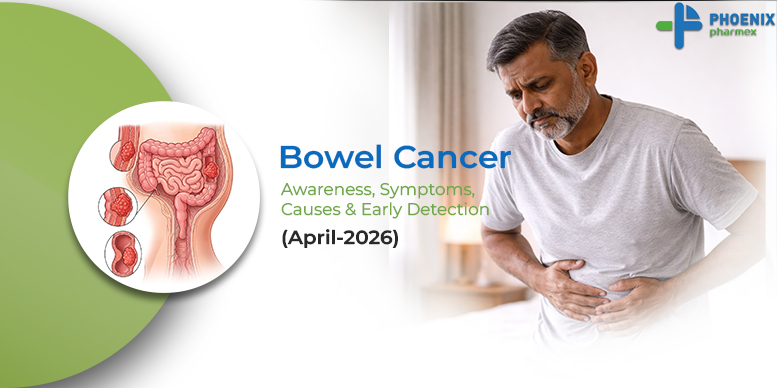
Bowel Cancer Awareness Month 2026: Symptoms, Causes & Early Detection
When the body changes quietly, the mind often fills the silence with worry — even when the body is asking for calm attention, not fear.
Early Symptoms of Bowel Cancer You May Ignore
It usually begins with something that doesn’t seem important enough to act on. A shift in bowel habits, a few days of discomfort, or a sense that digestion is not as predictable as it used to be. You may notice it, adjust your diet, and move on. But later, the thought returns — is this just routine, or something more?
Here is the hidden misunderstanding: digestive changes are extremely common and are most often linked to diet, stress, hydration, or temporary imbalances. The digestive system is sensitive and responds quickly to small changes in routine. However, because bowel health is not something people discuss openly, even minor and harmless symptoms can begin to feel uncertain when they persist.
During Bowel Cancer Awareness Month 2026, the goal is not to make you question every small symptom. It is to help you understand patterns — what is common, what may need attention, and how to approach it without urgency. Most symptoms have simple explanations. And when something requires evaluation, it can be done step by step, with clarity rather than fear.
Understanding Bowel Cancer
Bowel cancer, also known as colorectal cancer, refers to abnormal cell growth in the colon or rectum, which are parts of the large intestine. In many cases, this process begins as small growths called polyps. Most polyps are harmless and may remain unchanged, while some may slowly develop over time.
This gradual development is important to understand. It means that bowel cancer often evolves over a long period, allowing opportunities for early detection and intervention. It is not typically a sudden condition. It is a process that can be observed, understood, and managed with appropriate care. This understanding brings structure. And structure helps reduce uncertainty.
Causes of Bowel Cancer Explained
The inner lining of the bowel is constantly renewing itself in a balanced way. Cells grow, function, and are replaced in a controlled cycle. Sometimes, certain cells begin to grow differently and continue multiplying instead of stopping at the right time. Over time, this may lead to the formation of polyps, and in some cases, further changes can occur.
Several factors may influence this process, including age, family history, dietary patterns low in fiber and high in processed foods, smoking, physical inactivity, and long-standing inflammation in the bowel. However, it is important to hold this information with balance. Having risk factors does not mean that something will develop, and not having them does not completely remove the possibility.
Symptoms such as changes in bowel habits, fatigue, abdominal discomfort, or occasional bleeding are often linked to much simpler causes. These symptoms are signals, not conclusions. When viewed this way, they become something to observe rather than something to fear.
Diagnosis and Screening for Early Detection
When symptoms persist or screening is due, healthcare professionals follow a structured and step-by-step process. It begins with a conversation — understanding your symptoms, their duration, and any relevant medical or family history. This is often followed by simple screening methods such as stool-based tests.
If further evaluation is needed, a colonoscopy may be recommended. This allows direct visualization of the bowel and, if necessary, removal of polyps during the same procedure. If any abnormality is found, further evaluation is carried out carefully before any conclusions are made.
If a diagnosis is confirmed, treatment planning is done gradually and may include procedures, surgery, medication-based therapies, or regular monitoring. Each step is guided by clear information. There is no immediate rush to decisions.
Why Bowel Cancer Cases Differ
Bowel conditions can vary widely from one person to another, and this variation often creates uncertainty. However, variation does not mean unpredictability. It simply reflects that each individual’s situation is unique. Differences may depend on the stage at which a condition is detected, its location within the bowel, overall health, and how the body responds to treatment. Some findings are minor and easily managed, requiring minimal intervention. Others may require more structured care over time. Early detection often allows for simpler and more manageable treatment pathways. Even in cases that require more attention, care plans are adjusted gradually based on progress. Variation is not chaos. It is personalized care.
Preparing for Bowel Cancer Diagnosis and Care
If you are undergoing evaluation, it is natural to experience waiting periods between tests, unfamiliar medical terms, and multiple discussions before clarity is reached. Emotionally, this phase can feel uncertain. This is a normal part of the process. What can help is introducing a sense of structure. Keeping track of your symptoms, noting how often they occur, and preparing questions before appointments can make consultations more meaningful. Bringing a trusted person along can also provide reassurance. You are not expected to understand everything immediately. Understanding builds step by step. You are allowed to take your time, ask questions, and ensure that decisions feel clear before moving forward.
Life After Bowel Cancer Awareness and Treatment
For many individuals, bowel health awareness becomes part of routine well-being, much like other preventive health checks. Daily life continues people work, travel, eat, and maintain their usual routines.
Even for those who undergo treatment, many return to active and fulfilling lives with time and support. Awareness is not about expecting something serious. It is about reducing uncertainty through early attention. When something is checked early, options become clearer. And when options are clearer, a sense of control naturally returns.
A Grounded Perspective
Bowel Cancer Awareness Month 2026 is not a reminder to worry about every digestive change. It is a reminder to notice patterns that persist, to speak openly about symptoms, and to participate in appropriate screening when needed. Most digestive symptoms have simple explanations. And when something requires attention, it is approached through a structured and thoughtful medical process. Calm attention is more helpful than silent worry. Understanding brings steadiness. And steadiness allows you to move forward with clarity.
Frequently Asked Questions (FAQs) About Bowel Cancer
1. Are bowel changes always serious?
No. Most bowel changes are caused by diet, hydration, or minor issues and are usually temporary. However, if symptoms persist or feel unusual, it’s important to get them evaluated.
2. What are early symptoms to notice?
Early signs may include changes in bowel habits, fatigue, abdominal discomfort, or blood in the stool. If these symptoms continue, they should be discussed with a healthcare provider.
3. Can bowel cancer be detected early?
Yes. Screening methods like stool tests and colonoscopy can detect changes early, sometimes even before symptoms appear. Early detection often leads to better outcomes.
4. Is colonoscopy painful?
Colonoscopy is usually done under sedation, so most people feel little to no pain during the procedure. Mild discomfort afterward is possible but temporary.
5. What should I do if I feel unsure about symptoms?
Start with a consultation and note your symptoms clearly. Evaluation helps you understand the cause without making assumptions.
Reference
https://www.thevillagepractice.org/2026/03/11/bowel-cancer-awareness-month-2/
https://www.awarenessdays.com/awareness-days-calendar/bowel-cancer-awareness-month/
https://www.bppoddarhospital.com/colorectal-cancer-awareness-month-early-detection-saves-lives/
https://gutscharity.org.uk/awareness/awareness-dates/bowel-cancer-awareness-month/
Disclaimer:
The information in this article is provided for educational and awareness purposes only and should not be considered medical advice, diagnosis, or treatment guidance. Health conditions vary among individuals, and readers should consult qualified healthcare professionals for personalized medical recommendations. Phoenix Pharmex supports access to reliable health information but does not provide medical consultation through this content. Any medicines or therapies mentioned are for informational reference only and should be used under the supervision of licensed medical practitioners.








.png)





.png)

.png)


 Login with Facebook
 Login with Google
